
China warehouse consolidation can reduce DDP shipping costs when several supplier orders are packed separately, use oversized cartons, or contain unnecessary outer packaging. Instead of shipping each package as it arrives, buyers can send all orders to one China warehouse, wait until the required parcels are received, and prepare the final shipment before requesting a DDP quote.
For 1688 buyers, this matters because one purchase often involves several suppliers. Each supplier normally packs for domestic delivery within China, not for international freight. Once those separate cartons move into DDP shipping, empty space, duplicate packaging, and poor carton sizing can increase chargeable weight.
That said, consolidation does not guarantee a lower shipping bill. Savings depend on the products, final carton dimensions, actual weight, volumetric weight, destination, and the DDP route available for the cargo.
Why Multiple 1688 Supplier Orders Often Cost More to Ship
Buying from several 1688 suppliers gives buyers more product choice and often better pricing, but it also creates a packaging problem.
Imagine buying clothing from one supplier, accessories from another, packaging materials from a third, and small components from a fourth.
All four suppliers send their orders separately.
The warehouse may receive:
- several small cartons
- large boxes with only a few items inside
- products packed inside both retail and courier cartons
- thick courier bags around boxes
- excessive protective filler
- different carton sizes that are difficult to combine efficiently
For domestic delivery, none of this is unusual.
For international shipping, however, every extra centimeter can matter.
A shipment may weigh 25 kg on a scale but still be charged at a higher weight because of the total volume occupied by the cartons.

Supplier Packaging Is Rarely Optimized for International Freight
Most 1688 suppliers are focused on getting the goods safely to a Chinese address.
They usually do not know which international route the buyer will use later, so they have little reason to optimize packaging for DDP shipping.
A common package may contain several layers:
- product packaging
- retail box
- protective filler
- supplier carton
- courier bag
Some of those layers are necessary. Others are only useful for domestic transport.
Once the goods arrive at a China warehouse, the buyer has a chance to review the packaging before paying for international shipping.
That is where consolidation becomes useful.
How China Warehouse Consolidation Can Reduce DDP Shipping Costs
The value of consolidation is not simply turning five packages into two cartons.
The real benefit is that the final international shipment can be built around the goods instead of around each supplier’s original packaging.
A warehouse can check what has arrived, compare carton sizes, remove unnecessary outer materials, and repack compatible items more efficiently.
This can lower DDP shipping costs in several ways.
Remove Packaging That Adds Volume but Little Protection
Some supplier cartons are much larger than the products inside.
Others use double outer boxes or large courier bags that are no longer useful once the products are inside the consolidation warehouse.
Depending on the goods, the warehouse may remove:
- oversized domestic cartons
- duplicate outer boxes
- unnecessary courier bags
- excessive filler
- damaged outer packaging
- empty packaging that serves no purpose in international transit
The aim is not to make every carton as small as possible.
A fragile item may need more protection, not less. Retail packaging may need to stay intact if the buyer intends to resell the product.
The useful question is: Which packaging is necessary for protection, and which packaging is simply increasing chargeable volume?
That distinction is more important than simply reducing carton count.

Volumetric Weight Is Often Where the Savings Come From
Many first-time buyers focus only on actual weight.
That can be misleading.
International freight services often compare the physical weight of a carton with its volumetric or dimensional weight. A large lightweight carton takes up cargo space, so it may be charged at a higher calculated weight.
DHL also explains that chargeable weight may be based on the greater of actual weight and dimensional weight in its official guidance on how chargeable shipping weight is calculated.
A general volumetric calculation looks like this:
Length × Width × Height ÷ volumetric divisor
The divisor varies by carrier, service, and route, so buyers should always use the actual formula applied by their shipping provider.
This is why repacking can matter.
If the same goods fit safely into a smaller carton, the actual product weight may stay almost unchanged, while the volumetric weight decreases.
For bulky but lightweight products, that can have a noticeable effect on the final DDP quote.
Actual Weight vs Volumetric Weight in DDP Shipping
Suppose a carton measures:
50 × 40 × 40 cm
and weighs:
8 kg
The physical weight is straightforward: 8 kg.
But if the DDP shipping channel calculates a volumetric weight above 8 kg, the shipment may be charged using that higher figure.
Now suppose the warehouse removes unnecessary outer packaging and repacks the same goods into a more compact carton.
The products still weigh close to 8 kg.
What changes is the amount of transport space they occupy.
That is why reducing carton dimensions can sometimes save more than removing a small amount of physical weight.
For some 1688 orders, the shipping problem is not that the products are heavy. It is that they are packed inefficiently.

Example: Five Supplier Cartons Before Consolidation
Consider a buyer purchasing from four 1688 suppliers.
The warehouse receives:
- Supplier A: 1 carton
- Supplier B: 2 cartons
- Supplier C: 1 carton
- Supplier D: 1 carton
There are five cartons in total.
After opening and checking the outer packaging, the warehouse finds that:
- one carton is less than half full
- two small orders can safely share one carton
- one supplier used a second outer carton that is no longer needed
- several courier bags and loose fillers can be removed
- one carton can be replaced with a smaller box
After repacking, five cartons may become two or three more compact cartons.
That does not mean the shipping cost automatically falls by the same percentage.
Five cartons becoming three does not equal a 40% freight saving.
The correct comparison is based on the final shipment data:
- total actual weight
- carton dimensions
- volumetric weight
- chargeable weight
- number of international shipments
- route and destination
Only after those numbers are available can the buyer see whether consolidation actually reduced the DDP cost.
Consolidation Can Reduce Repeated Small-Shipment Charges
Volume is only one part of the cost.
Some DDP channels may also have:
- minimum chargeable weights
- minimum freight charges
- fixed processing fees
- per-shipment handling costs
This can make several small international shipments surprisingly expensive.
Suppose three suppliers each send a small order.
If those packages leave China separately, each shipment may be subject to its own minimum pricing.
If the goods are compatible and can wait, sending them together may be more efficient.
This does not apply to every route or freight provider, but it is worth checking whenever the buyer has several small 1688 orders.
Do Not Finalize a DDP Quote Before the Shipment Is Ready
One of the most common pricing mistakes happens before consolidation even begins.
A buyer asks for a final DDP quote while only part of the cargo has arrived.
At that point:
- some suppliers are still preparing orders
- carton dimensions may be estimated
- reported weights may be inaccurate
- the final carton count is unknown
- repacking has not been completed
- special cargo may not yet have been identified
A quote at this stage can only be provisional.
For multiple-supplier orders, a more reliable sequence is:
supplier delivery → warehouse receiving → inspection → consolidation → repacking → final measurement → DDP quote
Once the warehouse has the final cartons, the quote can be based on real shipment data rather than assumptions.
This is especially important when volumetric weight is involved.
When China Warehouse Consolidation May Not Save Much Money
Not every shipment has enough wasted space to justify significant repacking.
There are several common cases where the savings may be limited.
Heavy, Dense Products
Metal parts, tools, hardware, and machinery components often have high actual weight relative to their size.
If the cartons are already compact, reducing volume may have little effect on chargeable weight.
Consolidation can still simplify shipping, but the freight saving may be small.
Fragile Products
Fragile cargo often needs extra space.
Glass, ceramics, delicate electronics, and sensitive components may require foam, dividers, stronger cartons, or corner protection.
Trying to reduce the shipment too aggressively can increase the chance of damage.
Saving a small amount on freight is rarely worthwhile if the goods arrive broken.
Special or Restricted Cargo
Certain products may need specific shipping channels.
These can include:
- lithium batteries
- liquids
- powders
- magnetic products
- certain chemical products
They may not always be suitable for the same route as ordinary goods.
Before consolidation, the warehouse or freight provider should confirm whether the products can travel together.
The lowest carton count is not always the safest or most compliant shipping option.
Should Every 1688 Order Wait for Consolidation?
No.
Cost is only one part of the decision.
Imagine five supplier orders have already reached the warehouse, but the final supplier says the remaining goods will take another 10 or 12 days.
Waiting could allow all six orders to ship together.
But it also means delaying the five orders that are already ready.
For slow-moving inventory, waiting may make sense.
For urgent stock replenishment, the extra delay may cost more than the freight saving.
The decision should consider:
- delivery deadline
- inventory needs
- supplier lead times
- product compatibility
- potential freight saving
- shipping route availability
Good consolidation is not simply about making shipping cheaper.
It is about finding the right balance between cost, speed, and risk.
What Happens at a China Warehouse Before DDP Shipping?
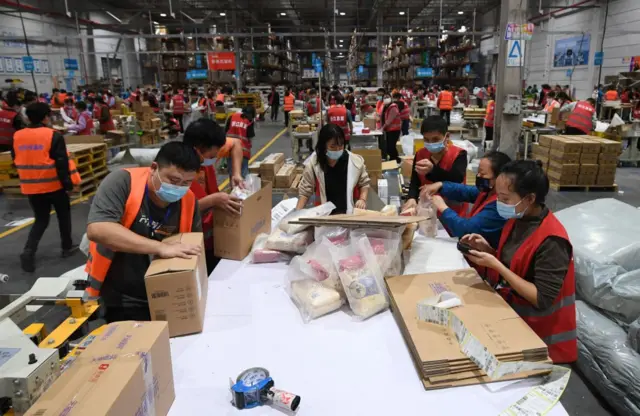
For buyers purchasing from multiple 1688 suppliers, the China warehouse acts as the point where separate domestic deliveries become one planned international shipment.
Supplier Packages Are Received
Each supplier sends the order to the same warehouse address.
As the parcels arrive, the warehouse records them and matches them with the buyer’s order information.
Basic Inspection Can Be Done Before Shipping
The warehouse can check basic visible details such as:
- quantity
- color
- model
- obvious damage
- general visible condition
Photos or videos can also help the buyer confirm what arrived.
This is a receiving-level inspection, not a substitute for professional factory quality control or laboratory testing.
Early Orders Can Wait for Later Suppliers
If several orders are expected, the first parcels can remain in storage until the remaining suppliers deliver.
This is one of the main advantages of using a consolidation warehouse.
Without it, the buyer may have little choice but to ship each supplier order separately.
Compatible Orders Are Repacked
Once the required goods have arrived, the warehouse can remove unnecessary outer packaging and combine compatible products.
The final packing method should protect the goods while avoiding wasted volume.
Final Cartons Are Weighed and Measured
After repacking, the warehouse can confirm:
- carton count
- weight of each carton
- carton dimensions
- total shipment weight
This is the data needed for a more reliable freight calculation.
The DDP Quote Is Based on the Final Shipment
The final cost can then be calculated using factors such as:
- destination
- product category
- actual weight
- volumetric weight
- chargeable weight
- shipping route
- customs requirements
This produces a much more useful figure than quoting a shipment that has not yet been finalized.
How 1688 Buyers Can Lower DDP Shipping Costs Before Ordering
Buyers can make consolidation easier before the first supplier even ships.
Use One China Warehouse Address
If possible, ask all suppliers to deliver to the same warehouse.
This makes it easier to track packages, wait for multiple orders, and prepare one international shipment.
Tell the Warehouse How Many Supplier Orders Are Coming
If six packages are expected, the warehouse should know that before it prepares the shipment.
Otherwise, early parcels may be packed before the remaining orders arrive.
Ask Suppliers to Avoid Oversized Outer Cartons
For suitable products, buyers can ask suppliers to use reasonable packaging and avoid unnecessary outer boxes.
Not every supplier will change their packing method, but it can reduce repacking later.
Decide Which Retail Packaging Must Be Kept
A reseller may need every branded retail box.
A buyer importing spare parts may not.
Tell the warehouse what can and cannot be removed before consolidation begins.
Compare Freight Using Final Carton Data
Supplier estimates are useful for rough budgeting.
They should not be treated as final shipping data.
Whenever possible, compare DDP quotes after consolidation and final measurement.
China Warehouse Consolidation vs Shipping Each 1688 Order Separately
| Factor | Separate Supplier Shipments | China Warehouse Consolidation |
|---|---|---|
| International shipments | Several | Usually fewer |
| Packaging | Supplier’s original packaging | Can be reviewed and optimized |
| Volumetric weight | Calculated separately | May decrease after repacking |
| Inspection | Harder to coordinate | Can be done before shipping |
| Freight data | Often estimated early | Based on final cartons |
| Tracking | Multiple international shipments | Easier to manage |
| Delivery speed | Can be faster for urgent orders | May require waiting |
| Best suited for | Time-sensitive individual orders | Multiple supplier purchases |
Neither option is always better.
Separate shipping makes sense when an order is urgent or the goods cannot travel together.
China warehouse consolidation is usually more useful when several orders can be combined safely and shipped on a similar schedule.
Is China Warehouse Consolidation Worth It for DDP Shipping?
For many 1688 buyers, yes—especially when several suppliers send small orders in oversized or inefficient packaging.
The main savings usually come from making the international shipment more efficient, not from reducing the actual weight of the products.
That can mean:
- smaller carton dimensions
- lower volumetric weight
- fewer unnecessary outer cartons
- fewer separate international shipments
- fewer repeated minimum charges where applicable
- better use of available carton space
But the right way to measure the benefit is not to count how many boxes disappeared.
The useful comparison is:
chargeable weight and DDP cost before consolidation vs chargeable weight and DDP cost after consolidation.
If you are buying from several 1688 suppliers, sending the orders to one China warehouse gives you the chance to make that comparison before the goods leave China. The packages can be received, checked, consolidated, repacked, measured, and quoted as one planned DDP shipment instead of several unrelated supplier parcels.
Explore More:
1688 Warehouse vs Direct International Shipping: Which Is Better for Overseas Buyers?
DDP Shipping from China vs Standard Shipping: Cost, Risk and Best Choice for Importers
1688 Tracking Number Explained: Where to Find Your Shipment ID and Check Order Progress